AI infrastructure is not only a cost center. It is now a security boundary.
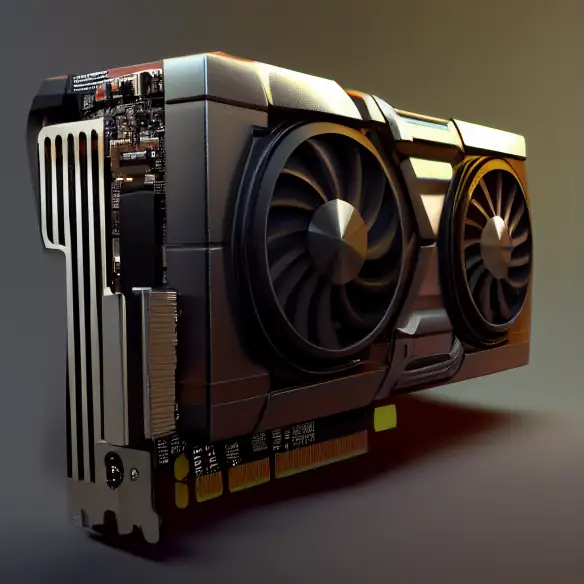
On August 27, 2026, The Hacker News reported on GPUThor, a Rowhammer attack against NVIDIA workstation GPUs with GDDR6 memory. Public reporting said the attack could defeat ECC protection and enable denial of service or privilege escalation to a root shell under specific conditions.
This article uses public reporting and academic research context. It contains no private knowledge of any affected company.
The owner-level lesson is simple. Shared GPU systems should be treated like shared compute with sensitive tenancy, telemetry, and isolation requirements. The GPU is no longer just a fast card under the desk.
What public reporting says
The Hacker News reported that academic researchers tested Ampere-class NVIDIA workstation GPUs and found them vulnerable to GPUThor. The reporting said the attack requires the ability to launch an unprivileged CUDA kernel on the target GPU, either as a co-tenant on a shared card or as untrusted code on a single-tenant machine.
That condition matters. This is not a reason for every company to panic. It is a reason for teams running shared GPU infrastructure, untrusted workloads, AI labs, hosted notebooks, inference platforms, research clusters, and customer compute to review isolation.
ECC is helpful. It is not a complete risk story.
Why this matters to owners
GPU infrastructure has moved from specialist labs into normal business.
Companies use GPUs for AI inference, training, image processing, simulation, video analytics, fraud models, search, data pipelines, and customer-facing automation. Many teams also share GPUs across tenants, departments, experiments, contractors, or customer workloads.
When hardware is shared, isolation becomes a product promise. If one workload can influence another workload, crash a system, leak state, or escalate privileges, the business owns that risk even if the bug lives below the application layer.
The risk is especially important for companies selling AI infrastructure, hosted tools, regulated workloads, customer-specific models, or analytics on sensitive data.
The practical questions
Owners do not need to become memory researchers. They do need to ask better questions.
Which GPUs do we run? Which generations? Which memory types? Which drivers? Which firmware? Which kernel modules? Which virtualization layer? Which scheduler? Which tenants share a card?
Can untrusted users run CUDA kernels? Can customer code run near another customer's workload? Can internal experiments run near production inference? Are notebooks isolated from release systems? Are GPU error counters monitored? Are crashes investigated as security events or only as reliability noise?
Those questions define whether the risk is theoretical, contained, or urgent.
What teams should inspect now
Create a GPU inventory. Include model, memory type, driver version, firmware, host OS, container runtime, orchestration layer, tenants, and workload classes.
Separate trust levels. Customer workloads, third-party notebooks, research code, production inference, and internal batch jobs should not automatically share the same GPU boundary.
Restrict untrusted kernels. If users can run arbitrary CUDA code, the platform needs a stronger isolation story and clear monitoring.
Watch ECC and machine-check signals. Hardware error counters, sudden resets, unexplained GPU faults, and repeated crashes deserve security review in shared environments.
Review scheduler policy. GPU sharing, MIG configuration, container privileges, device plugin settings, host access, and driver interfaces should be documented.
Plan graceful failure. If a GPU class needs to be isolated, retired, or moved to single-tenant use, the business should know cost, timeline, and customer impact.
Preserve evidence. Keep records of reviewed hardware, affected workloads, tenant boundaries, mitigations, and monitoring changes.
What buyers ask
Buyers of AI systems increasingly ask where their data runs. They ask whether models, prompts, embeddings, logs, and artifacts can cross tenant boundaries. They ask whether infrastructure is shared. They ask what isolation means.
The answer should include hardware boundaries, tenancy model, driver/runtime controls, monitoring, incident response, and change triggers.
That answer builds trust because it connects low-level reality with business commitments.
Where SToFU Systems fits
SToFU Systems reviews low-level and AI infrastructure where application security alone is not enough. We connect GPU hardware, drivers, kernels, containers, schedulers, model serving, logs, tenant boundaries, and operational evidence.
For owners, the output should be practical:
- GPU and driver inventory.
- Tenancy map.
- Untrusted-code exposure.
- Isolation gaps.
- Monitoring signals.
- Mitigation options.
- Customer-ready risk language.
Fast infrastructure still needs proof. Especially when several teams or customers share it.