AI is now part of real operations. It writes code, reads documents, calls tools, summarizes tickets, searches internal knowledge, and touches customer data. That gives teams speed. It also gives attackers more paths to test.
But the problem is wider than AI.
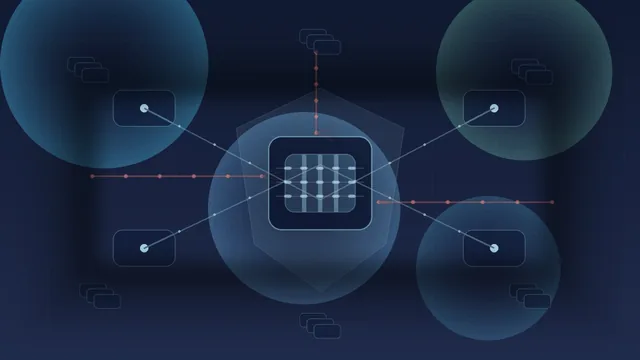
A modern company exposes a full security contour: web apps, APIs, admin panels, mobile clients, desktop software, cloud roles, OAuth apps, CI pipelines, secrets, logs, payment flows, data stores, vendors, support tools, RAG indexes, and agents. AI adds pressure to that contour. It does not replace it.
That distinction matters. A certificate that covers only the AI layer is too narrow for a serious team. The team wants to know whether the system can handle the full path: identity, data, money, code, infrastructure, operations, and the new AI workflows that sit on top.
Investors ask for evidence. Banks ask for evidence. Fintech partners ask for evidence. Enterprise procurement asks for evidence. A clear answer from the team helps. A verified certificate carries more weight.
What changed in 2026
On May 11, 2026, Google Threat Intelligence Group reported that adversaries are moving from early AI experiments into industrial use of generative models across attack workflows. Google described AI supported vulnerability discovery, exploit generation, malware obfuscation, autonomous malware operations, reconnaissance, information operations, and AI supply chain attacks. The report also states that GTIG identified a cyber crime actor using a zero day exploit that Google believes was developed with AI.
On May 7, 2026, Microsoft Security published research on remote code execution paths in AI agent frameworks. In one Semantic Kernel case study, prompt injection reached tool execution because the agent accepted model supplied parameters. Once a model can call tools, a prompt can move from text manipulation into file writes, data exposure, and remote code execution.
On April 30, 2026, the NSA, CISA, the UK NCSC, the Canadian Centre for Cyber Security, ASD's ACSC, and other agencies released joint guidance on agentic AI services. Their warning is practical: agentic systems add privilege risk, design risk, behavior risk, structural risk, and accountability risk. Actions can cross connected components faster than normal review can follow.
OWASP lists prompt injection as LLM01 in the 2025 Top 10 for LLM applications. NIST's adversarial machine learning taxonomy covers direct prompting attacks, indirect prompt injection, data poisoning, model extraction, privacy compromise, and agent security. These are no longer edge cases. They are operating risks for products that ship AI into user flows.
The lesson is simple. AI expands the map. The whole map still has to be checked.
The commercial pain
The outside world does not see your architecture diagram. It does not see the ticket where the team says the issue is fixed. It sees risk.
It sees a product connected to finance, identity, CRM, analytics, cloud, billing, code hosting, and support workflows. It sees OAuth permissions. It sees vendors. It sees admin surfaces. It sees AI agents that can call tools. It sees customer data moving through many hands.
For a fintech company, that can slow partner onboarding. For a company working with money, it can block payment, banking, or procurement review. For a startup raising capital, it can create a due diligence gap. For a company selling to enterprise stakeholders, it can make the security questionnaire longer, slower, and more expensive.
Security has to become visible, concrete, and easy to explain.

What the SToFU Systems certificate covers
SToFU Systems Security Certification covers the full security contour, including AI when the product uses it.
AI is included when the product uses it. The rest of the system is included because attackers do not respect product categories. They move through the weakest useful path.
We start with scope. We map what is exposed, what is sensitive, and what can change money, data, access, or operations. A normal certification scope can include:
- Public web applications and backend APIs.
- Admin panels, support tools, and internal workflows.
- Authentication, authorization, session handling, and role models.
- OAuth apps, third party integrations, and vendor access.
- Cloud identity, storage, network rules, and deployment paths.
- CI/CD pipelines, build artifacts, dependencies, and secrets.
- Mobile apps, desktop clients, update channels, and local storage.
- Payment flows, account takeover paths, financial workflows, and fraud exposure.
- Logging, alerting, incident readiness, and evidence quality.
- AI agents, RAG sources, prompts, tool permissions, memory, and output paths.
Then we test the contour against practical failure modes. We look for authorization gaps, broken object level access control, unsafe agent permissions, prompt injection, data leakage, secrets exposure, dependency weakness, supply chain risk, insecure storage, weak recovery paths, and misconfigurations that can turn a small bug into a business event.
The certificate records what was reviewed, when it was reviewed, what was found, what was fixed, and how long the result remains valid.
What the client receives
The team needs a document that can move through a business process without translation from an engineer in every meeting.
The SToFU Systems certification package gives that structure:
- A security certificate with the reviewed scope and validity period.
- A scope summary that names the systems, flows, and boundaries reviewed.
- A remediation status summary for closed findings.
- Evidence references for retest results and important checks.
- Practical notes for changes that should trigger a new review.
This helps leadership answer direct questions:
- Was the exposed contour checked?
- Were critical and high risk findings fixed?
- Does the review include AI only, or the whole system?
- Can this be shown to investors, partners, auditors, and enterprise stakeholders?
- What changes would make the certificate outdated?
That last question is important. A certificate is useful because its boundary is clear.

When the certificate is issued
A certificate is issued when the review shows that no critical or high risk exploitable vulnerabilities remain in the agreed scope.
If vulnerabilities are found, the path is direct: fix, retest, preserve evidence, then certify. A closed weakness proves discipline when the team fixes it and verifies the result.
For most production systems, the certificate is valid for up to 12 months. That is a practical rhythm for sales, investor review, procurement, and annual security planning. Software changes quickly, so the validity period has to respect reality.
Material changes should trigger a new review sooner. Examples include a new AI agent, a new payment flow, a new OAuth integration, a major cloud migration, a new admin panel, a critical dependency change, a new vendor with sensitive access, or a significant change to data handling.
Why this matters now
AI helps attackers research faster, automate more, generate cleaner payloads, and test logic that older scanners miss. It also helps defenders when it is used with isolation, monitoring, narrow permissions, and evidence.
But the core move is older and stronger than the hype.
Map the contour. Test the exposed paths. Fix what matters. Retest. Preserve the proof. Give the market a certificate that says the system was reviewed with clarity and force.
That is the purpose of SToFU Systems Security Certification: make security clear enough for investors, fintech partners, procurement teams, and enterprise stakeholders to act on it.