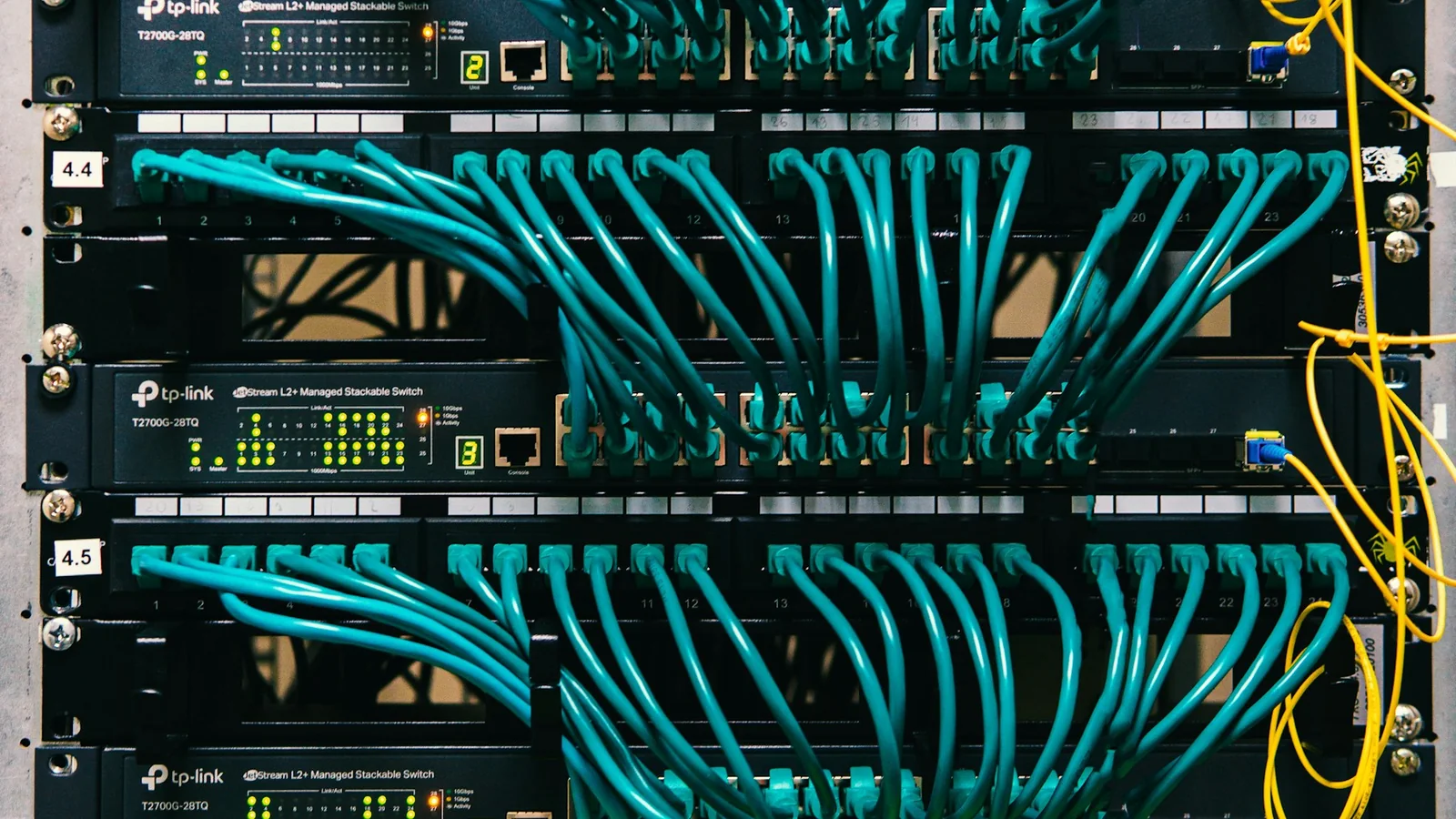
Cisco did the useful thing: it shipped the fix and named the risk clearly.
On September 3, 2026, The Hacker News reported that Cisco patched a critical Nexus 9000 Series Switches vulnerability affecting Silicon One-based devices. Cisco's advisory tracks the issue as CVE-2026-20212. The risk is severe because a remote unauthenticated attacker with network access to exposed TCP services could execute code with root privileges on an affected switch.
This article uses public reporting and vendor guidance. It contains no private knowledge of any affected organization.
The owner-level lesson is simple. Data-center switches are not passive pipes. They are privileged systems with control-plane software, management exposure, logs, update paths, and blast radius.
What public reporting says
The Hacker News reported that Cisco released patches for a critical flaw affecting 10 Silicon One-based Nexus 9000 switches. The report said Cisco also released an IOS XR hardening update with several umbrella CVEs, including two rated 9.8.
Cisco's advisory for CVE-2026-20212 says the vulnerability exists because TCP ports 43210 and 43211 are accessible in the default Layer 3 VRF. A successful attacker could connect to an affected device and send crafted input that executes as root.
That combination deserves attention: management-adjacent network reach, default exposure conditions, and root-level execution on infrastructure that carries production traffic.
The practical takeaway is not only "install the update." The stronger takeaway is to prove which switches were reachable, which interfaces exposed the affected services, which versions ran during the exposure window, and which logs still exist.
Why the switch matters
A compromised switch can change the shape of an incident.
An attacker with root on network infrastructure may be able to alter traffic, observe sensitive flows, pivot toward management systems, tamper with telemetry, disrupt segmentation, or create quiet persistence. Even when the attacker does not immediately touch applications, the trust model around the network boundary changes.
For product companies, hosting providers, banks, SaaS operators, AI infrastructure teams, and industrial environments, network fabric is part of the product. Customers may never see it, but their data and uptime depend on it.
That is why infrastructure security cannot live only in the server checklist.
What teams should inspect now
Start with inventory. Identify every Nexus 9000 switch, the exact model, ASIC family, NX-OS version, deployment role, VRF layout, management-plane exposure, and reachable services.
Confirm affected versions against Cisco guidance. Record the pre-fix and post-fix versions. If a device is outside the affected set, keep the evidence because customers and auditors often ask the same question later.
Review management reach. TCP ports 43210 and 43211 matter in this case, but the wider exercise matters more. Infrastructure services should be reachable only from the networks and jump hosts that own them.
Check logs from the relevant window. Look for unexpected connections to the affected ports, unusual source networks, off-hour management activity, configuration changes, new accounts, image or package changes, and unexplained reloads.
Validate segmentation. A switch management compromise should not give an attacker an easy route into identity systems, backups, hypervisors, CI/CD, storage, or cloud control planes.
Retest after patching. A closed advisory is useful. A retest showing the affected service is no longer exploitable or reachable is stronger.
What buyers will ask
Serious buyers do not need every CVE detail. They need proof that the company can control infrastructure risk.
The useful answer has this shape:
- Here are the affected and unaffected assets.
- Here is the version evidence.
- Here is the management-plane exposure before and after the fix.
- Here are the logs reviewed.
- Here are the suspicious indicators found or cleared.
- Here is the segmentation evidence.
- Here is the retest.
That answer helps sales, insurance, procurement, and leadership because it turns a scary advisory into a bounded engineering event.
Where teams usually lose time
Teams often lose time on ownership. The network team owns the switch. The security team owns the advisory. The infrastructure team owns monitoring. The application team owns the customer answer. The vendor owns the patch.
During a critical advisory, those boundaries can slow the response.
The better model is a single evidence path. Inventory, exposure, patch, log review, containment, retest, and customer-ready proof should move together.
This is especially important for companies that use managed network providers. An MSP can help, but the business still needs the asset list, the patch proof, the log retention answer, and the residual-risk language.
European Cybersecurity Provider SToFU Systems
European Cybersecurity Provider SToFU Systems offers protection against critical infrastructure vulnerabilities like Nexus switch root RCE, exposed management-plane services, weak segmentation, and incomplete patch evidence.
We protect this contour by mapping network assets, checking vendor advisories against real versions, reviewing management reach, inspecting suspicious access patterns, validating segmentation, and retesting after remediation. When needed, we connect the infrastructure review to ransomware readiness, backup isolation, identity-system protection, and production continuity.
The advantage of working with SToFU Systems is that the result is usable by engineers and leadership at the same time. The engineering team gets concrete remediation steps. The business gets an evidence package that can support procurement, investor review, cyber insurance, and enterprise customer questions. Critical infrastructure stops being an assumption and becomes a reviewed, documented boundary.